01 / AssignmentHow we understood the assignment
The assignment asked the team to create a system that represented the group as a whole. At first, that was difficult: the group did not begin with an obvious shared identity, single worldview, or predetermined form for the final project.
The team began meeting weekly to co-design both the process and the result. Each person brought unique experiences, skills, and perspectives; the group then became the structure through which those contributions could interact, challenge each other, and crystallize into a shared direction.
The project moved from “my perspective” to “our system.” Individual experiences were treated as connected material rather than isolated stories, allowing the group to build knowledge by connecting what each person knew and filling in the gaps together.
02 / Common GroundCommonalities and differences became the design material
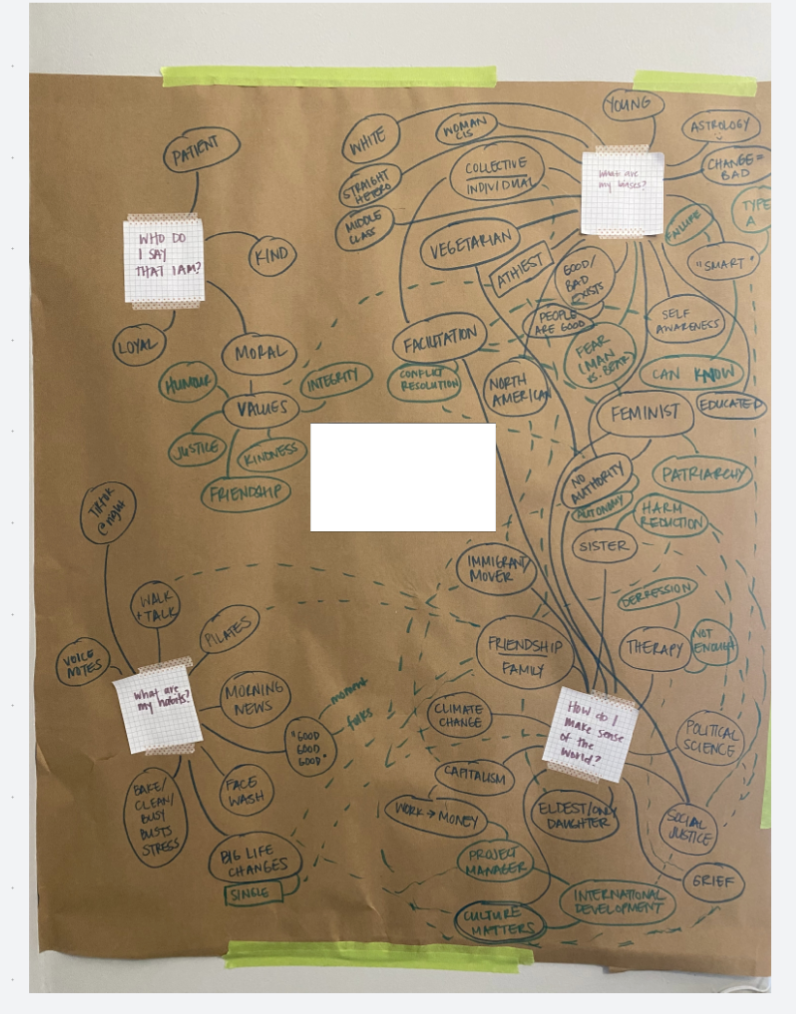
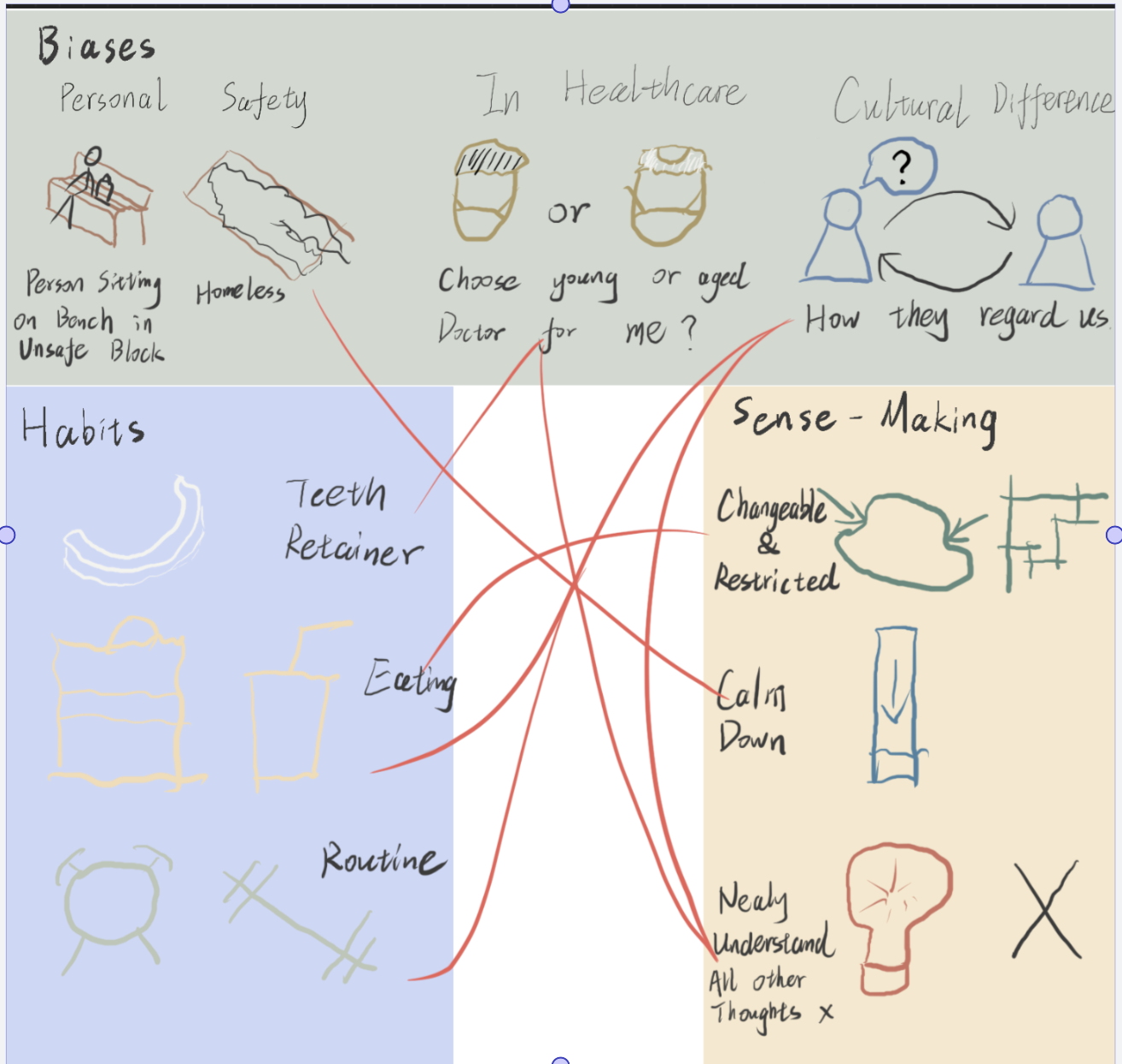
The team shared the maps created in the first assignment and used them to understand both overlap and difference. Common patterns included the desire to feel safe and included, experiences of stereotyping, and the work of making sense of how others perceive us.
Difference mattered just as much. Everyone came from a different cultural background and had lived across cultures. Those differences revealed distinct forms of cultural conditioning, sensemaking, habits, and interpretation.
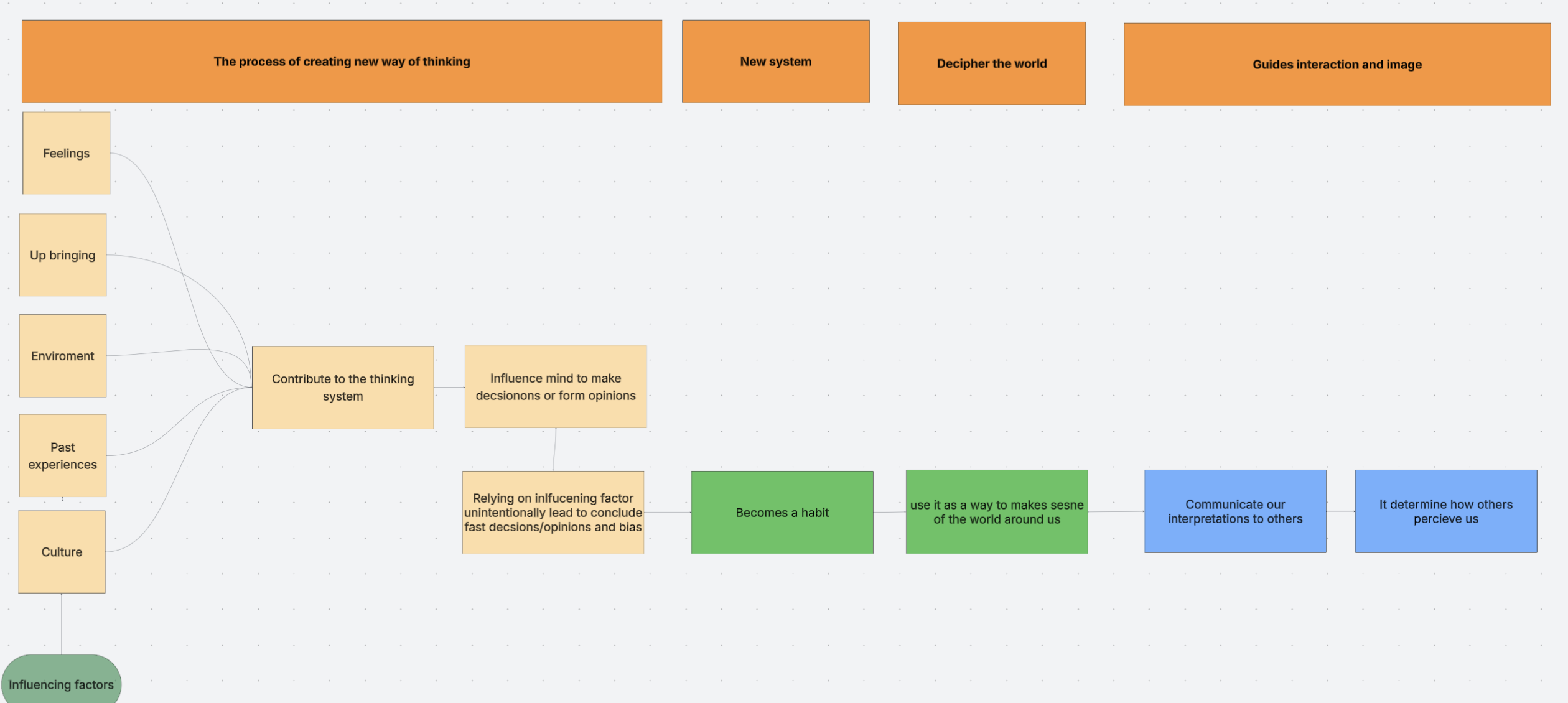
The maps made unconscious bias visible. They showed how bias shapes decisions and perspectives, while also showing how others’ bias had shaped lived experience. Rather than flattening difference, the team used it as the material from which the shared system could be built.
03 / DisagreementDemocratic discussion became part of the method
Disagreements emerged through interpretation of the assignment, priorities for the output, and the design of the game. Some members emphasized the tangible final game; others emphasized the process that produced it.
The group handled disagreement through discussion, clarification, and shared decision-making. Project-specific issues were discussed by everyone, and the group kept the shared goal in view while allowing different approaches to shape the result.
The discussions felt like moving pieces into place: one person added, another built on it, and someone else refined it. This became a rehearsal for the final game itself, where meaning is negotiated through group interpretation.
04 / WorldbuildingThe process turned maps into a shared world
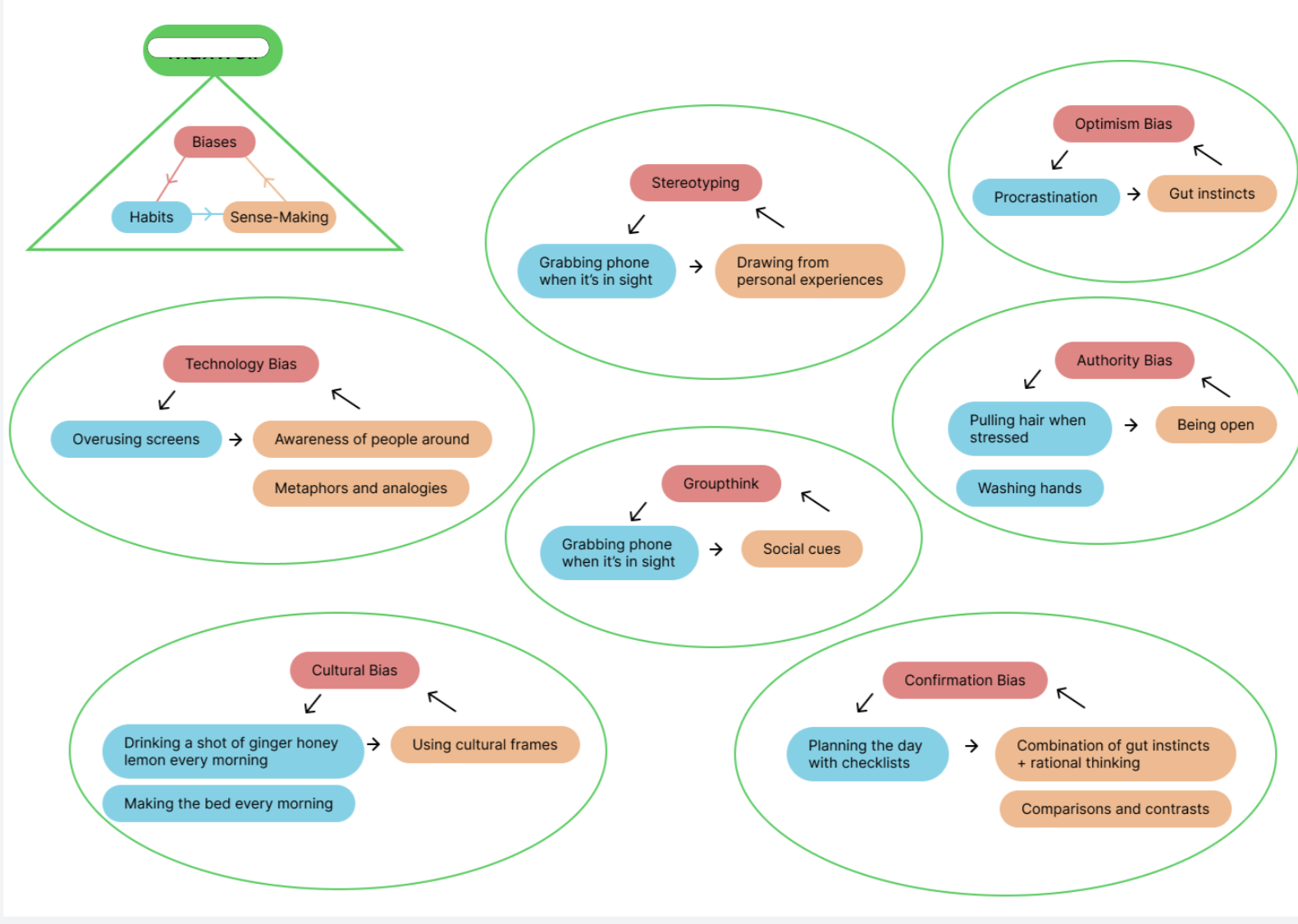
The team began with an online collaboration board, then each member presented their individual map to the group. Across the maps, the repeated relationship between bias, habits, and sensemaking became the most useful pattern.
That pattern suggested a game. If each map contained connected biases, habits, and sensemaking, then cards from those categories could be recombined into stories. The team translated a conceptual system into a playable world where the rules of interaction made the system visible.
The world was not invented from nothing. It was built from personal maps, shared conversations, cultural differences, disagreements, and the practical decisions needed to make an object people could actually use.
05 / GameLoops is the proof of the system
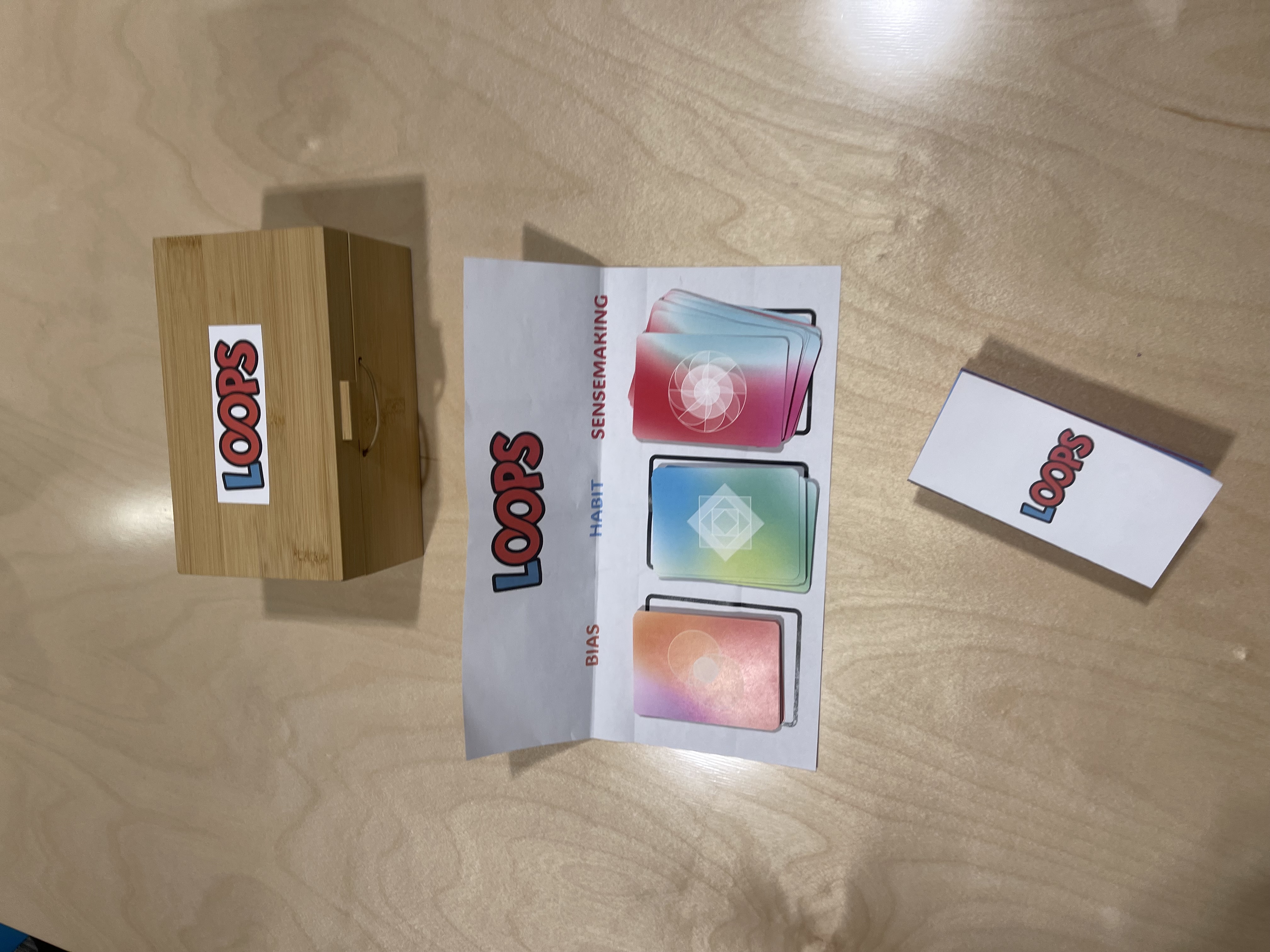
Loops is a four-player card game built around three card types: Bias, Habit, and Sensemaking. Players combine one card from each category to create a coherent story, then the group discusses and awards points based on how the story makes sense.
The name reflects the circular relationship between bias, habits, and sensemaking, as well as the circular turn-taking of play. The game is not only about winning; it asks players to notice how interpretation is formed, challenged, and socially valued.
The team designed the cards for use: portrait orientation felt more comfortable to hold, distinct categories helped players know what to draw from the table, and words plus symbols made the card types easier to recognize. The layout stayed simple so players could focus on interpretation instead of decoding the interface.
06 / Meta-SystemThe game represents the process that created it
Loops is a meta-representation of the team’s process. Just as the group had to make sense of different maps and perspectives, players must make sense of cards informed by their own experiences and interpretations.
The game turns abstract material into something concrete. Bias, habit, and sensemaking become cards; cards become stories; stories become negotiated value through group discussion.
The central question is the same one the team encountered: will people argue from old understandings, or will they use difference to create new connections and build a shared world together?